CAMP v2
- Idea
- Design
- Build
- Shipped
- In use
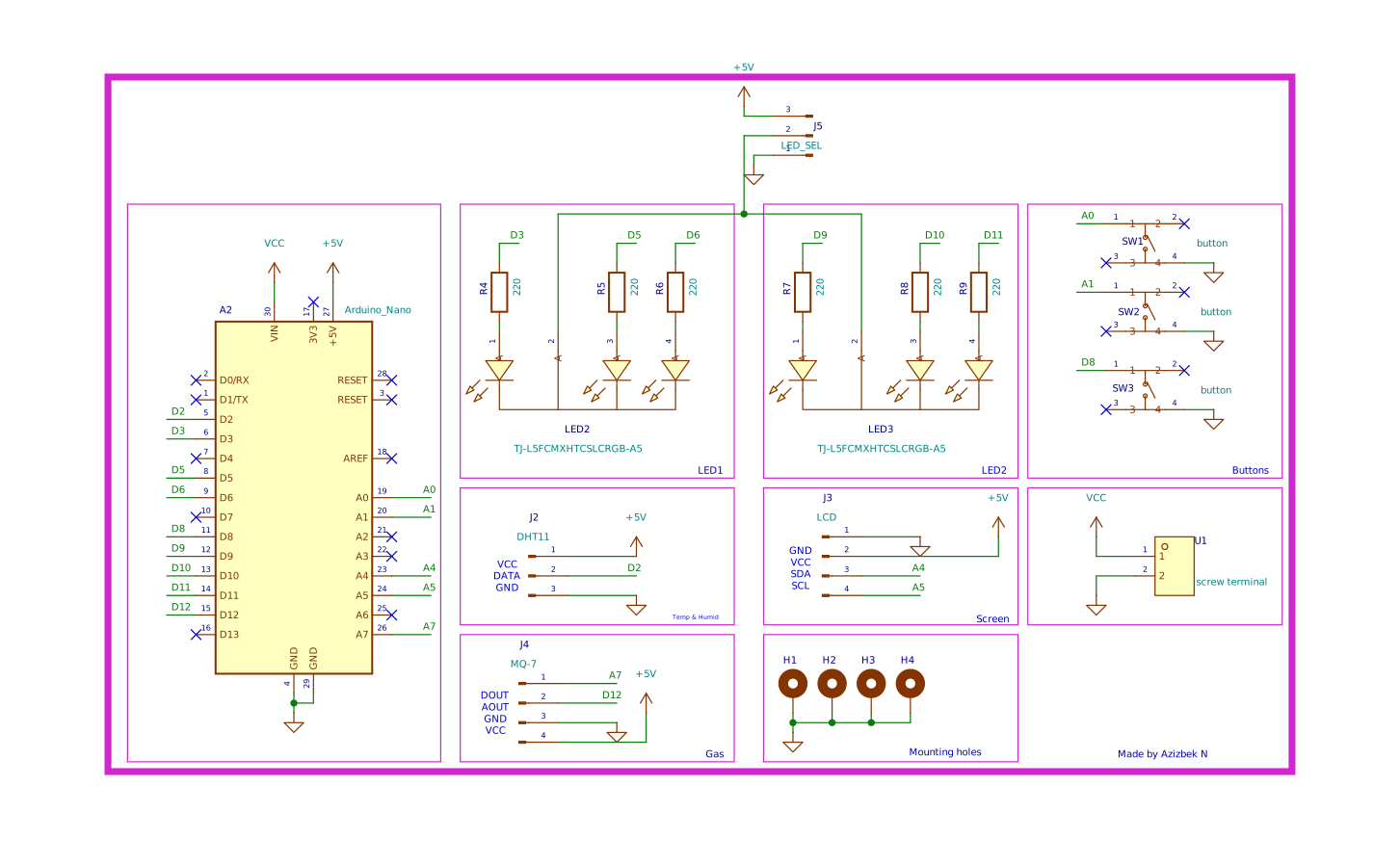
CAMP v2 is the board I designed for the electronics class at Technocamp 2026. It's an 80 × 80 mm carrier for an Arduino Nano that reads temperature, humidity and carbon monoxide, shows them on a small screen and sends them over USB. That's the same job the payload computer of a real CubeSat does.
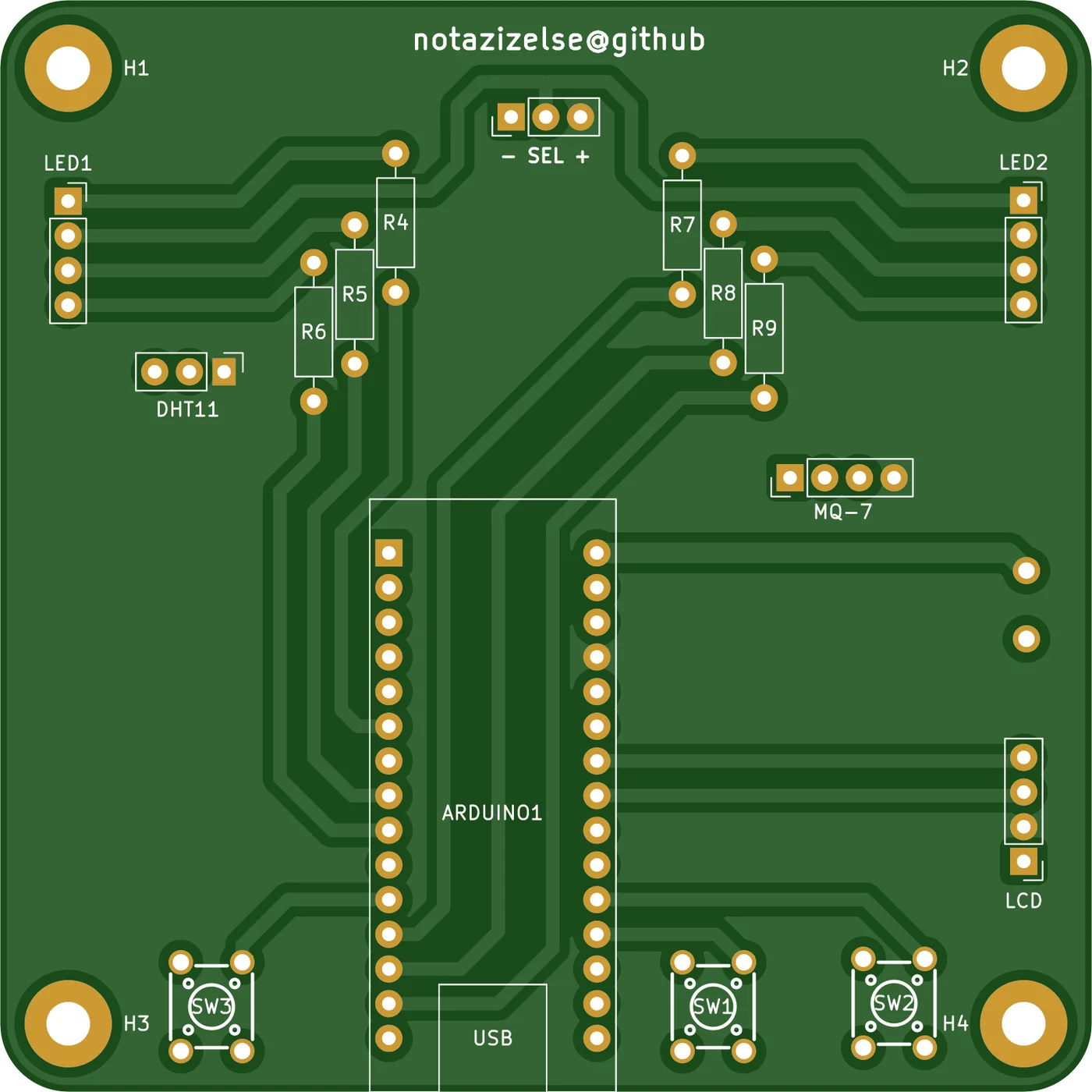
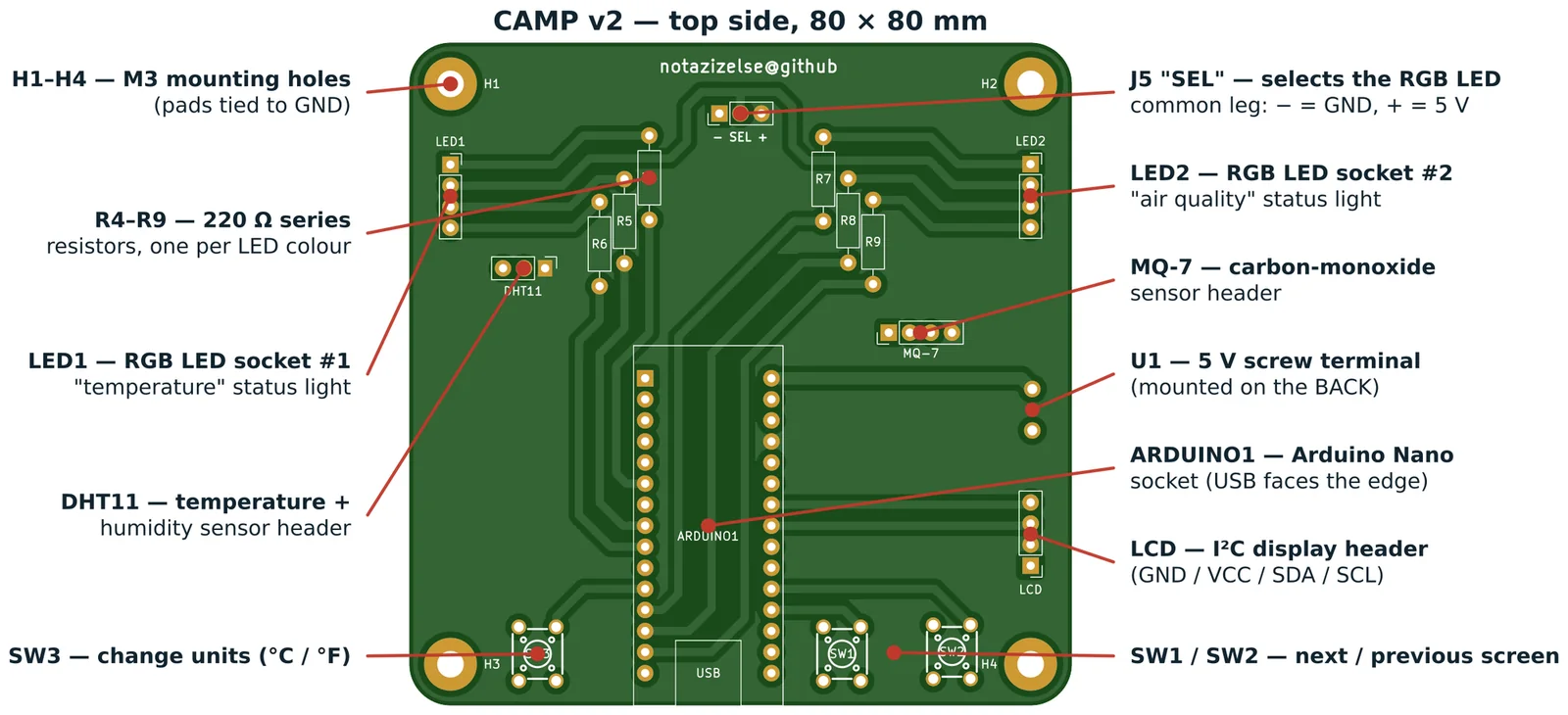
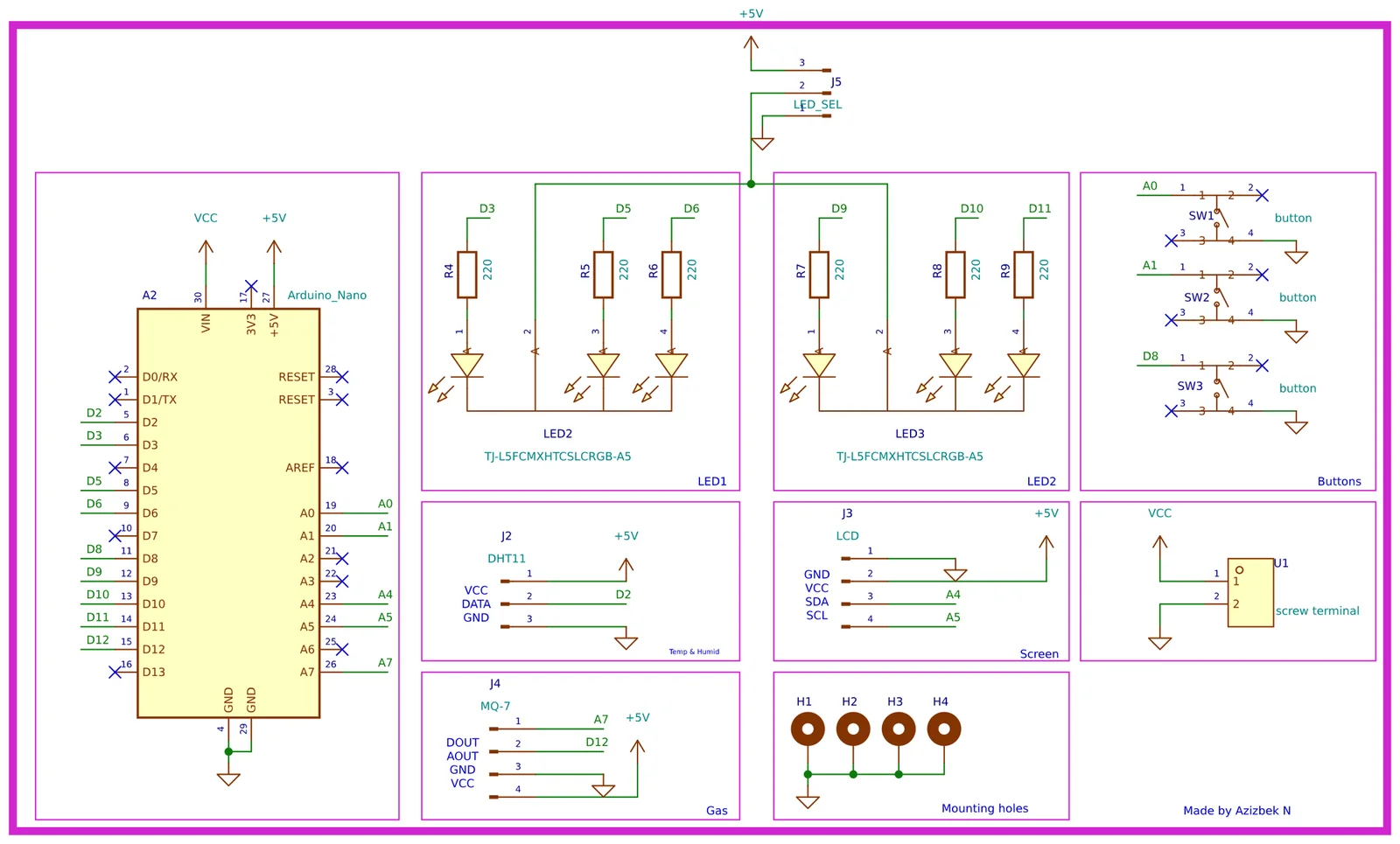
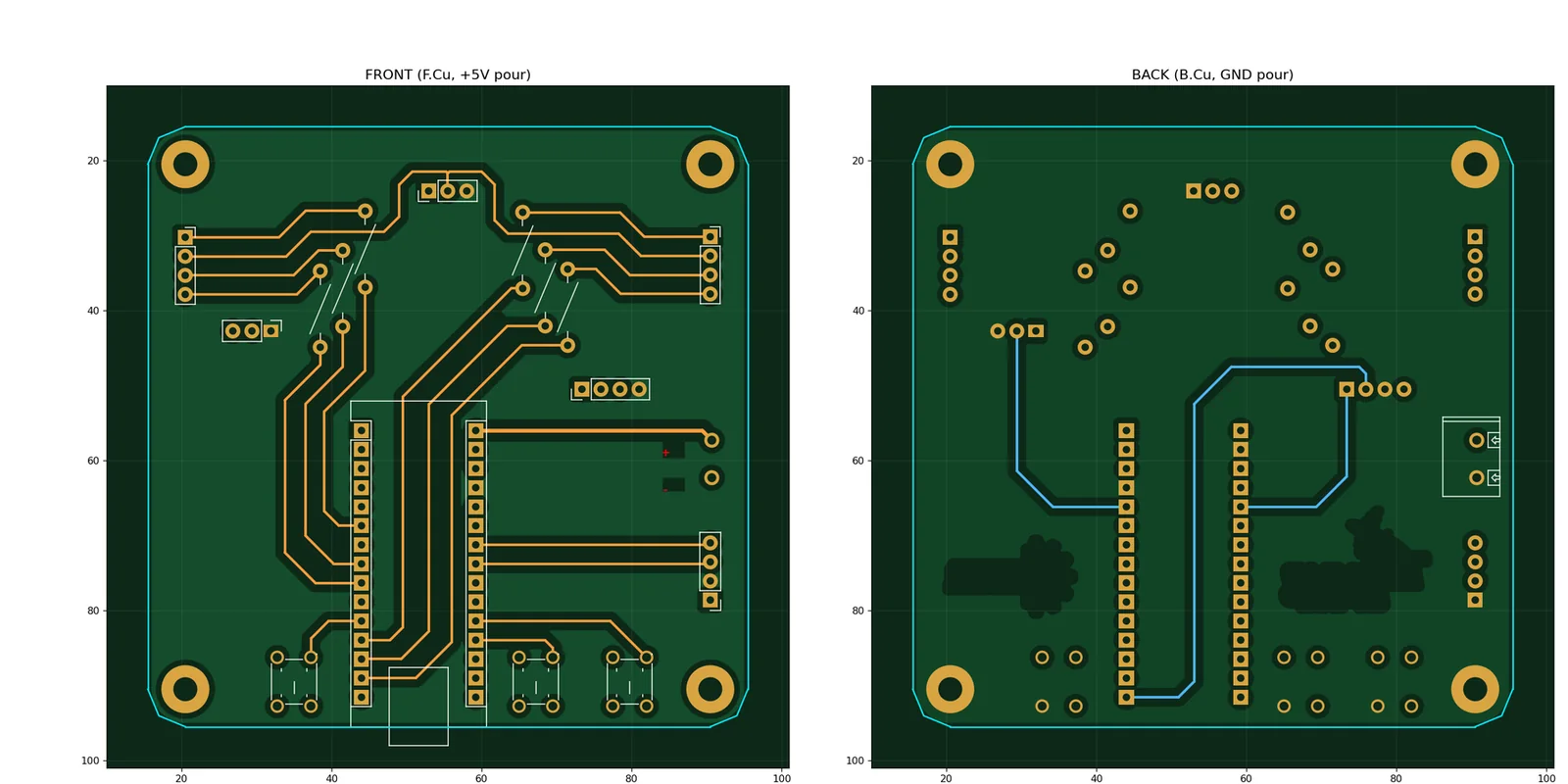
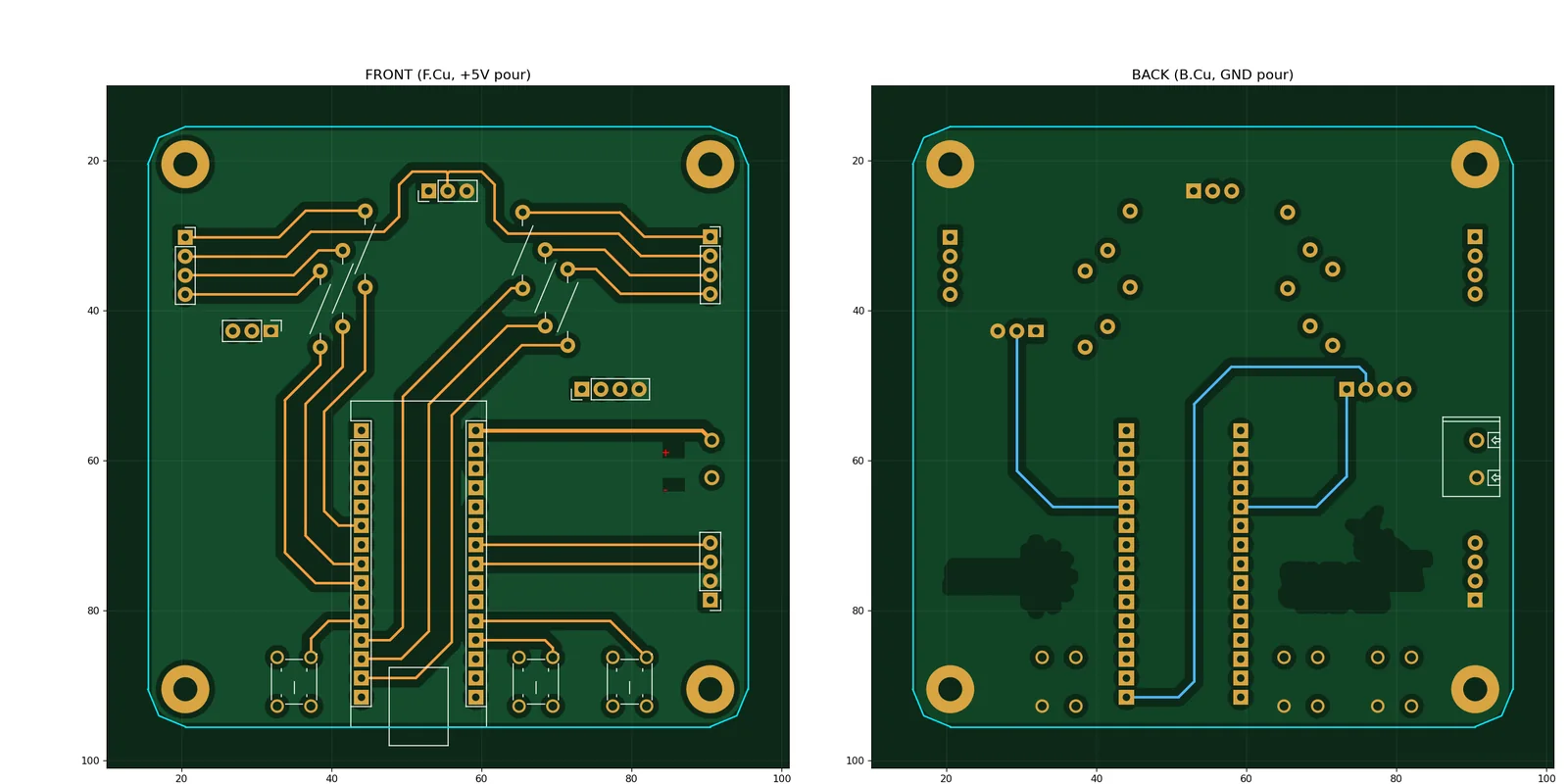
Every part is through-hole, so a 12-year-old can solder it with a normal iron and no magnifying glass. The board has no chips of its own. The Nano does the thinking, and the board gives it clean wiring, the right resistors in the right places, and connectors that only fit one way.
1Key Specifications
- Size
- 80 × 80 mm, 2 layers, all through-hole
- Brain
- Arduino Nano (ATmega328P) on sockets
- Sensors
- DHT11 temperature + humidity, MQ-7 carbon monoxide
- Outputs
- 16×2 I²C LCD, two RGB LEDs, three buttons, USB serial
- Tools
- KiCad 10, LCSC parts, JLCPCB production files
- Made for
- Technocamp 2026, Robotics & Engineering Association, Turin Polytechnic University in Tashkent
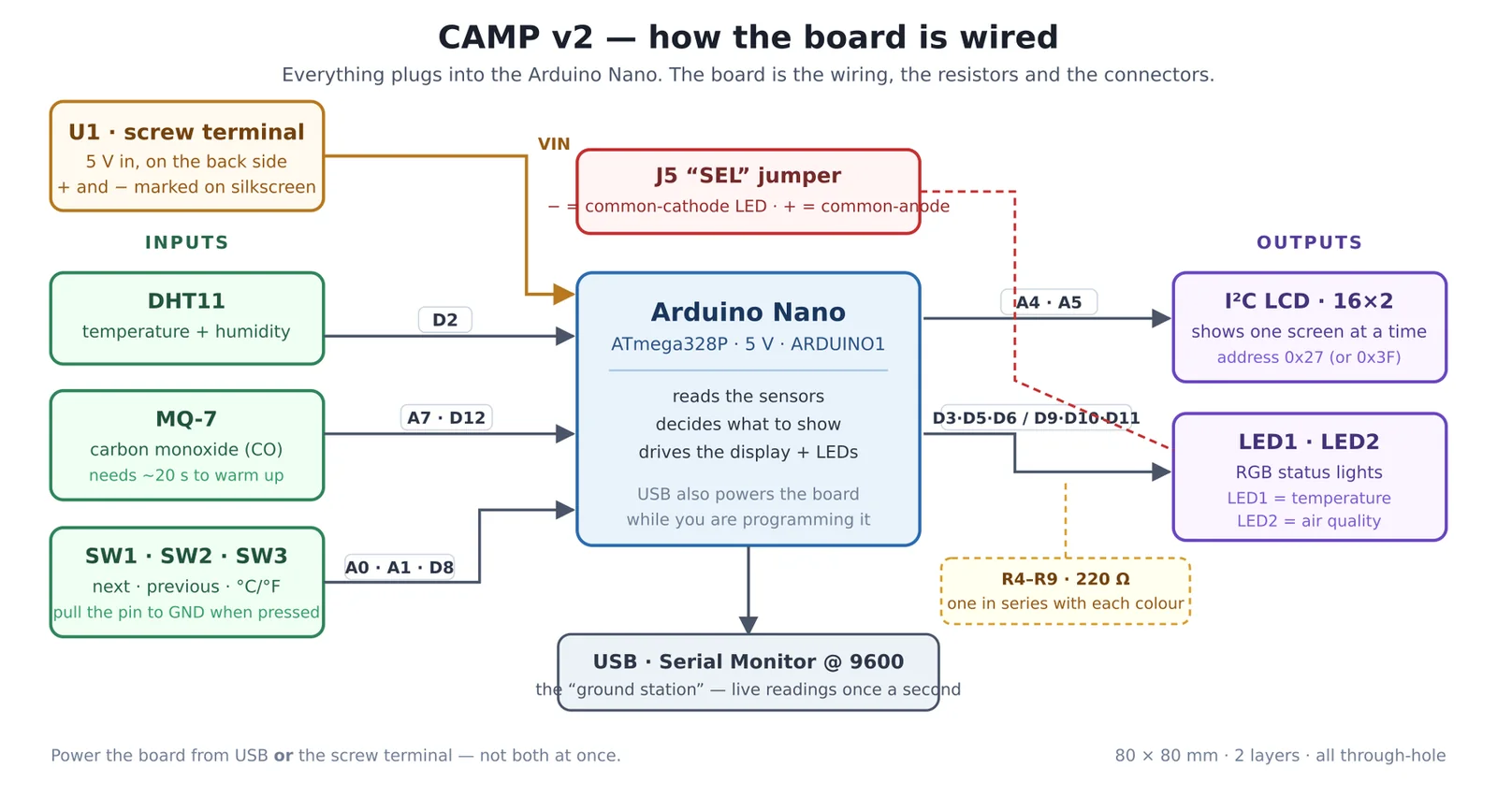
2Functional Block Diagram
- inputsDHT11, MQ-7, 3 buttons
- brainArduino Nano
- outputs16×2 LCD, 2 RGB LEDs
- linkUSB serial
3Why I made it
At Technocamp I taught 200 students aged 12 to 17 to design PCBs and etch them with chemicals in a camp in the mountains. They needed a board that does something real, that a beginner can assemble, and that still teaches proper wiring. Loose sensor modules on a breadboard fall apart, so this board turns them into one instrument.
4How it works
The sensors and buttons on the left tell the Arduino something. The screen and LEDs on the right are how the Arduino tells you something. Nothing talks to anything else directly, every signal goes through the Nano. The LEDs sit in sockets so they can be swapped, and a jumper picks common-cathode or common-anode LEDs.
5Teaching with it
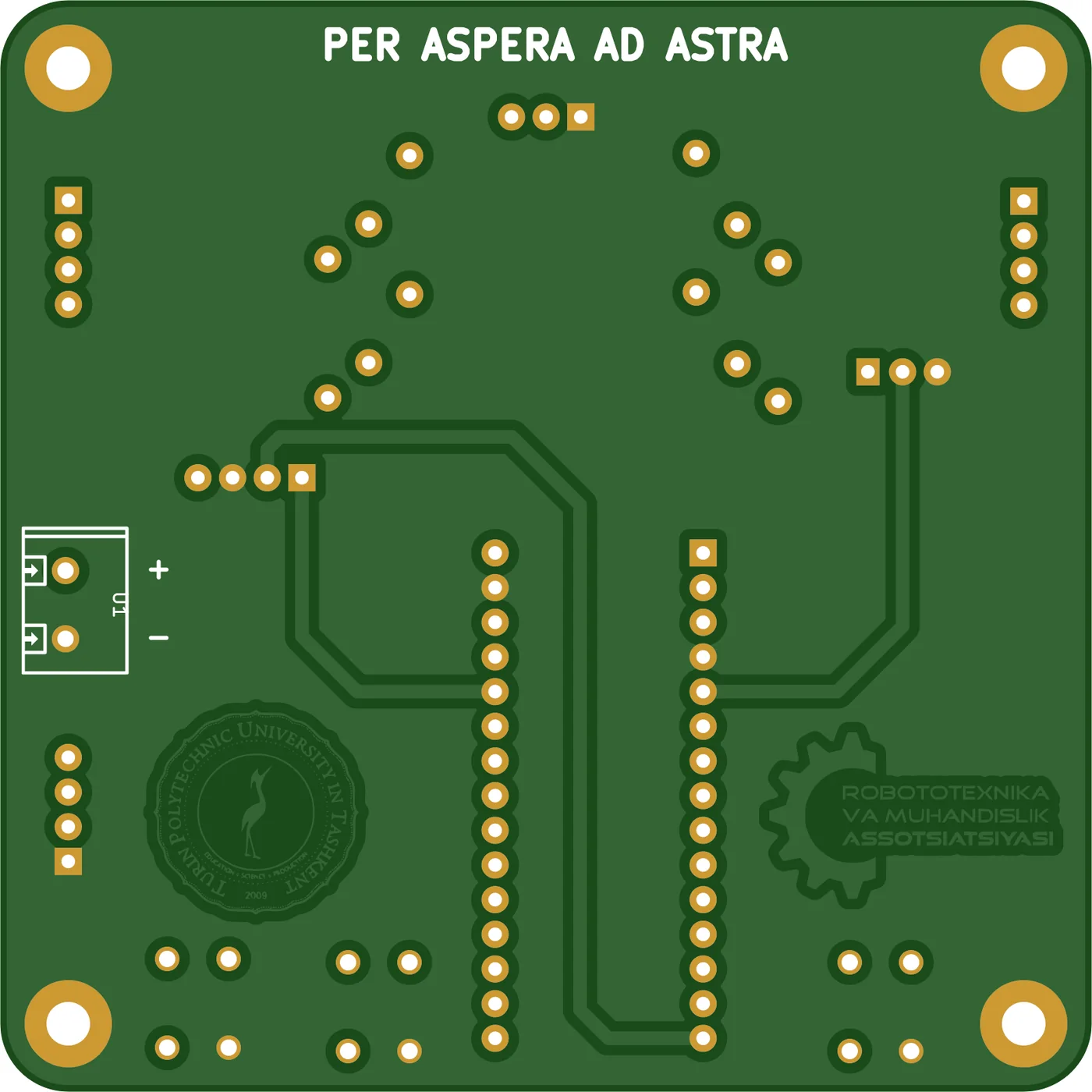
The build guide, troubleshooting guide and hardware reference are written in English and Uzbek. The back of the board says PER ASPERA AD ASTRA. This autumn I'm using the same board to teach 20 students at Turin Polytechnic, with boards ordered from China this time instead of etched by hand.
6Pictures
7Technical Documents
8Design Files
- ZIPGerbers, rev BExactly what went to the fab.159 KB
- CSVBill of materialsWith LCSC part numbers.1 KB
- CSVPick and place1 KB
- INOFirmware (Arduino sketch)20 KB
- SVGSchematic (SVG)103 KB
- PDFFront copper plot (PDF)For printing a toner-transfer mask if you etch it yourself.230 KB